




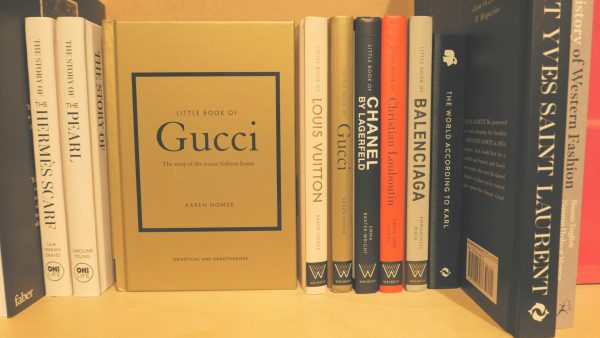
Language allows us to convey a message, but also provides control over how that message is perceived.
Benjamin Lee Whorf, an American linguist, considers the concept of language controlling messaging in his ‘Sapir-Whorf Hypothesis’ on linguistic relativity, as words hold different meanings in different languages, and so the language spoken can shape your perception of the message you are hearing.
Luxury brands have taken this technique and carved out their own distinct language, that resonates with a specific audience, which we will refer to as ‘the language of luxury’. They are looking for customers who speak the same ‘luxury language’, which will hold messaging that only a certain audience will understand.
We’re going to lift the lid on some of the basics behind ‘the language of luxury’ and provide an insight to incorporating it into your own branding.
“A brand is no longer what we tell the consumer it is – it is what consumers tell each other it is” (Scott Cook, co-founder, Intuit)
‘The language of luxury’ values carefully chosen wording and simplicity, to ensure a brand speaks to the correct audience.
Designed to display quiet confidence, the language is not trying to convince you to buy from them. They do not need over-exaggerations and vast explanations, as they are confident that the product will speak for itself, without needing to tell you ‘it’s the best on the market’.
Rather than a dress being made from ‘the finest silk in Europe’, opt for your information to be factual and brief. State that the dress is made from ‘100% mulberry silk’, as your target audience, who speak ‘the language of luxury’, will already know that mulberry is the highest quality silk available.
Brands should avoid loud marketing by limiting advertising and keeping descriptions on your website understated. Utilising a more refined approach reinforces to the customer that you are not trying to draw them in with flashy sales tactics.
“Luxury is attention to detail, originality, exclusivity and above all quality” (Angelo Bonati, former CEO, Panerai)
Echoing the technique of carefully choosing the marketing language you use, ‘the language of luxury’ provides minimal product description to customers, to create an exclusive group who understand how to access information about luxury items.
This technique instantly separates the luxury market from the mass-market, as information is reserved for certain customers. Luxury buyers understand that a lack of product information creates deliberate inaccessibility for wider consumers, making it more attractive as something not everyone can have.
Chanel is a prime example of this exclusivity, through their Haute Couture ranges, following runway shows. Anyone visiting the website can view the outfits, browsing images of beautifully curated, one-of-a-kind pieces. However, key information is missing, specifically how to purchase and the price.
Generally, Haute Couture is purchased through boutique appointments and so customers who do not speak ‘the language of luxury’ may be deterred from purchasing, confused by the lack of information on how to secure the item.
These products don’t just carry a high price tag and quality materials, but they carry a symbol of status. Customers want to buy into an exclusive ‘club’, as owning this item would show others that they can access hard-to-get luxury products.
“Experiences are an … offering, as distinct from services as services are from goods” (B. Joseph Pine II & James H. Gilmore, The Experience Economy)
Luxury customers also want to buy an experience, as they are interested in how a product will elevate their lifestyle, not just the practicalities of what it does.
A key way that ‘the language of luxury’ achieves this is by utilising emotive language, which helps customers become invested in your brand, through how it makes them feel. Subtle changes in language can shift your brand from mass market to luxury, by removing call-to-actions and using softer, emotive words such as ‘discover’ and ‘explore’, to indicate that this product will open them up to a luxury world.
Brand loyalty relies on customers feeling invested in this ‘world’ that your brand creates, and so building this narrative for them is important. Following the consistent pattern of simplicity and refinement, this ‘world’ can be created by the things you do not say.
Removing the classic ‘about us’ page, and replacing it with descriptions of skilled craftsmen you support, local farmers who provide ingredients, and the history behind your fabrics, highlights your brand’s ethics and choices. Customers can become invested in products which support smaller producers and craftsmen, and that feel separate to the wider mass-market.
“Simplicity is the ultimate sophistication” (Unconfirmed, often attributed to Leonardo da Vinci)
‘The language of luxury’ represents a quiet confidence that is carried throughout all written communication. Brands will not beg for your business, instead prioritising fewer, loyal clients, over a greater number of one-time customers.
By maintaining an air of enigma and avoiding flashy marketing jargon, the language has proven successful in attracting an audience who desire products that feel exclusive to them. Crucially, keeping consistent in using ‘the language of luxury’ is key, as this is the language your audience speaks. If you suddenly change your style, you risk confusing your audience and deterring them from your business.
If you’d like support with your own communication style, let us know: hello@8020comms.com